Green Village Individual Projects
The projects featured below are direct collaborations between CERN and individual organisations. Through the Green Village Initiative, CERN provides its campus as a testbed for the demonstration and validation of innovative sustainable solutions in real operational conditions.
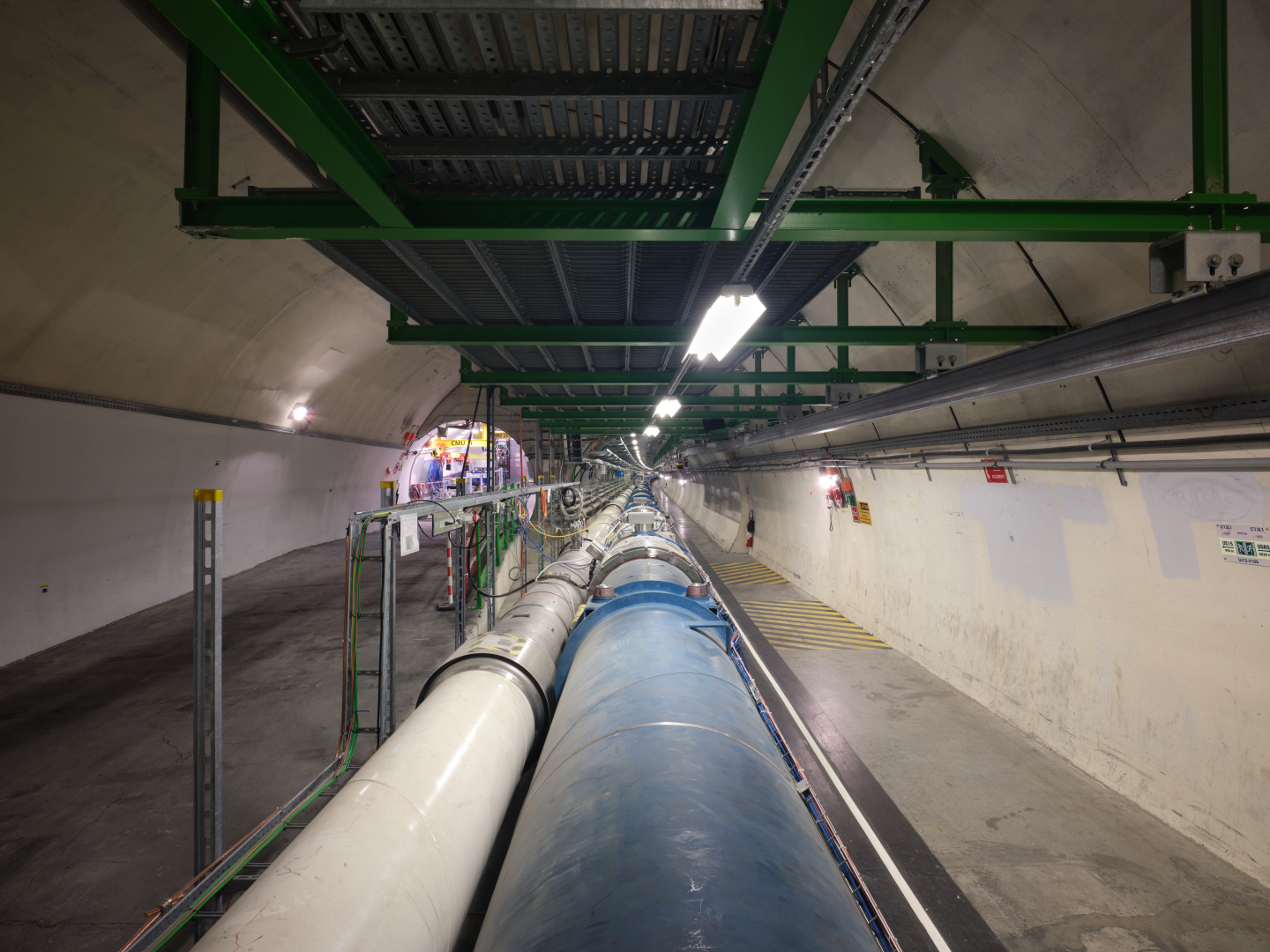
Ambient – AI Mapping & Biodiversity Monitoring Using Edge Technology
An innovative project combining edge artificial intelligence, low-power sensors and long-range communication technologies to monitor biodiversity across the CERN sites

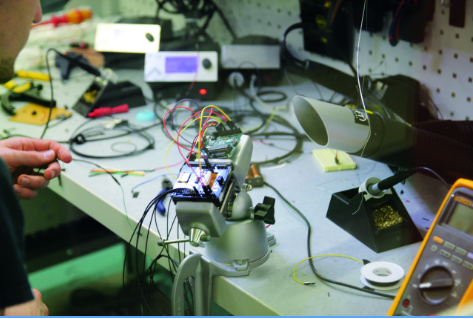
Developed through a collaboration between CERN’s Science and Civil Engineering (SCE) department, its Occupational Health, Safety and Environmental Protection (HSE) unit, and the University of Côte d’Azur’s Laboratory for Electronics, Antennae and Telecommunications (LEAT), the Ambient project uses autonomous, solar-powered acoustic sensors to identify bird species by their songs. Unlike conventional systems, the sensors process audio data directly on the device, transmitting only the detection results via the LoRaWAN network. This significantly reduces both energy consumption and communication requirements, allowing sensors to be installed close to wildlife habitats.
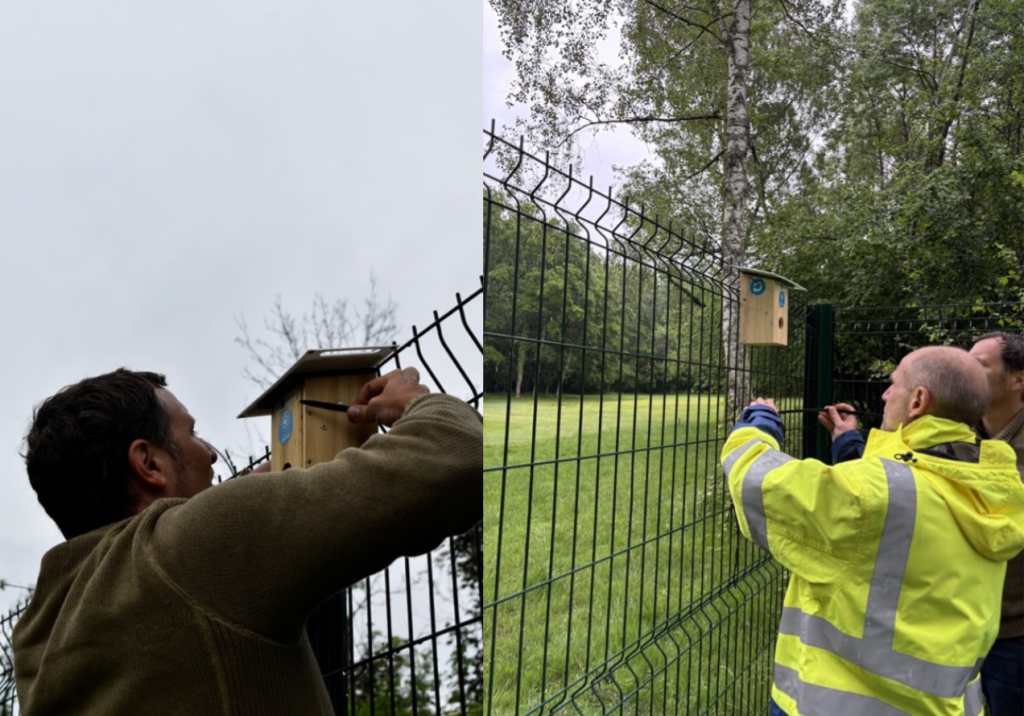
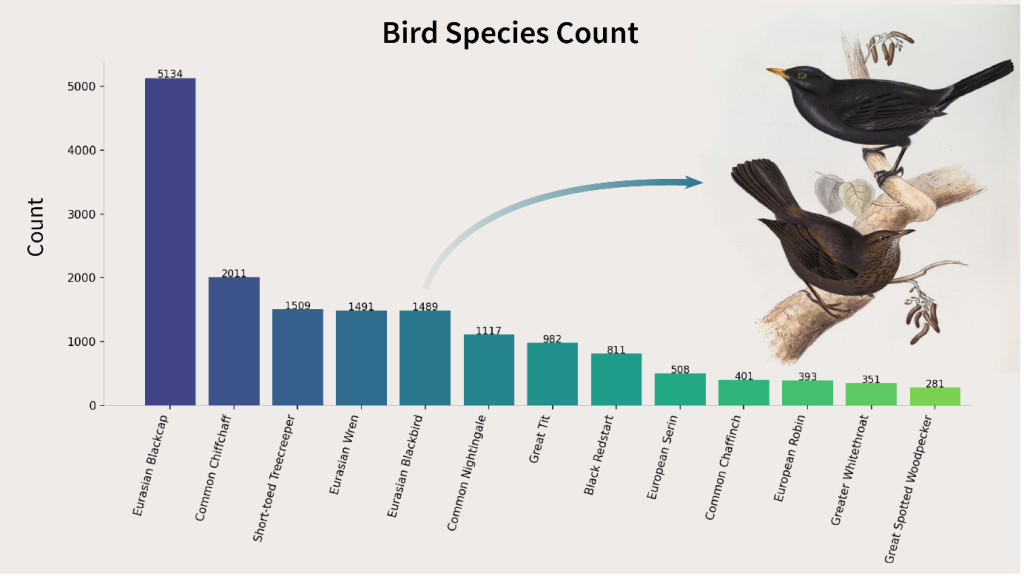
The project’s compact neural network, derived from the open-source BirdNet model, has been optimized to recognize the bird species most commonly found around CERN. Following the successful deployment of the first fifty sensors, the network will be expanded further to provide a more comprehensive picture of biodiversity across the CERN’s 625-hectare campus. Beyond environmental monitoring, the underlying technology could also be adapted to applications such as leak detection, infrastructure monitoring and industrial energy management.
Air Quality Nodes & Dashboard
An innovative solution combining low-cost sensors, IoT technologies and machine learning to improve air quality monitoring across the Global South
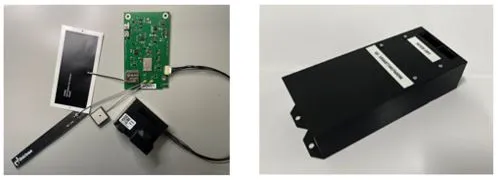
A consortium of AI, hardware, and public health experts have collaborated to develop a groundbreaking solution to air quality monitoring in the Global South. The Air Quality Nodes & Dashboard project utilizes low-cost air quality sensors, IoT-based technologies, and machine learning to provide real-time air quality measurements, as well as predictions based on trends.
Developed in collaboration with the University of Witwatersrand and CERN’s Green Village Initiative, the project will combine hardware components with an online web service application to process and display the data in a graphical format. This allows machine learning methods to be used on the data, developing models to predict air quality in the future. The project has already developed and deployed ten prototypes, which have been shown to be accurate and functioning ideally. The next stage is the deployment of these sensors in areas of low air quality in South Africa.
The project’s expected outcome is the mass-production and deployment of these nodes throughout the Global South, particularly in areas that have been neglected in studies on air quality. The project will help inform decisions about public health, mining, real estate, and numerous other industries in the private and public sectors. The project is expected to last for two years.
With the Air Quality Nodes & Dashboard project, the consortium aims to bridge the gap in air quality monitoring and benefit the Global South through innovative technologies and scientific research.
Passive reflectors for 6G data transmission
Sustainable wireless connectivity for future networks
Wireless 6G data transfer is expected to be introduced commercially sometime in the early 2030s. 6G networks will use higher radio frequencies than 5G and allow microsecond latency communications, thereby potentially pushing wireless data rates up to 1 terabyte per second. This development is thought to bring about as-yet unachievable innovations in wireless IoT-connectivity, edge-computing, sensing, imaging, and cognition. This increase in transmission output will come at a cost, however. Base-stations and other active network devices (e.g., IAB nodes, smart repeaters) will likely need to be more densely deployed than current 5G systems to reach envisaged data and latency rates. This fact may become a significant planning, economic, and permitting problem in high-urban density environments. Indeed, although the new capabilities of 6G will likely be welcomed by many professional and private users, there may also be significant concerns related to the sustainability of the wireless service due to its increasing energy hunger. It is therefore important that timely and green solutions are found that may lower the use of energy while guaranteeing high quality of service and also bringing down 6G installation and operating cost.
The ELEDIA@UniTN research group at the Department of Civil, Environmental and Mechanical Engineering (DICAM) of the University of Trento (https://www.eledia.org/eledia-unitn/) has developed a highly innovative paradigm, named Smart Electromagnetic Environment (SEME) for revolutionizing the design of future wireless systems. Within the SEME, several technological solutions and methodologies have been developed including static passive electromagnetic skins (SP-EMS), based on artificially engineered materials enabling arbitrary wireless signal reflection breaking the traditional Snell’s law. Such a technology is extremely low-cost and easily deployable. Their capability of tailoring the signal propagation to enhance the wireless coverage has been confirmed through indoor and outdoor testing in everyday life scenarios. It is expected that such a technology, once upscaled, could reduce the required number of active devices and provide an average cost saving of tens of euros per square meter as compared to traditional active coverage-enhancement strategies due to their recurrent energy costs adding to those required for the device purchasing, installation, and maintenance.
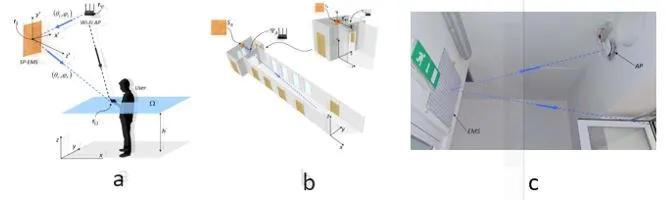
(b) SEME empowered Wi-Fi network in a realistic indoor scenario at DICAM
(c) Picture of a SP-EMS fabricated prototype and real deployment at DICAM
Technology demonstration inside CERN service tunnels
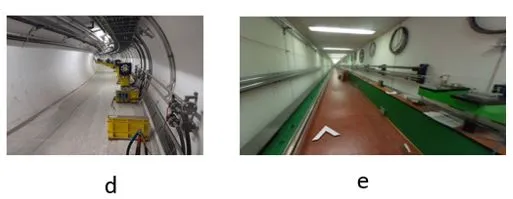
The ELEDIA@UniTN research group has recently teamed up with CERN’s Green Village Initiative to test and demonstrate different SP-EMS solutions inside CERN’s underground service tunnels. Some of the selected tunnels are kilometers long, others are sharply bend or curved and contain different obstacle shapes and sizes. The ELEDIA@UniTN team aims at investigating future applicability potential of the electromagnetic skins in – for example – long motorway tunnels to guarantee full data connectivity under all circumstances (including calamities) without the need for tunnel-specific and maintenance-intensive base-stations or power supply facilities. Obtaining testing permits on public tunnels is highly complex and time-consuming, so for this reason, the ELEDIA@UniTN turned to CERN’s Green Village Initiative. CERN’s specific interest in the demonstration is to identify whether the SEME technology could in future help to reduce the issues of low-data connectivity or signal dead-spots inside some of its buildings and tunnels.
The collaboration between the ELEDIA@UniTN research group and CERN’s Green Village Initiative started in November 2023 and is expected to last for one year. It includes SP-EMS design and planning based on GIS/CAD tools, prototyping and physical installation in service tunnels, benchmarking and comparative analysis of data signal strength inside different service tunnel sections. The research activity carried out by the ELEDIA@UniTN research group is led by Prof. Andrea Massa.